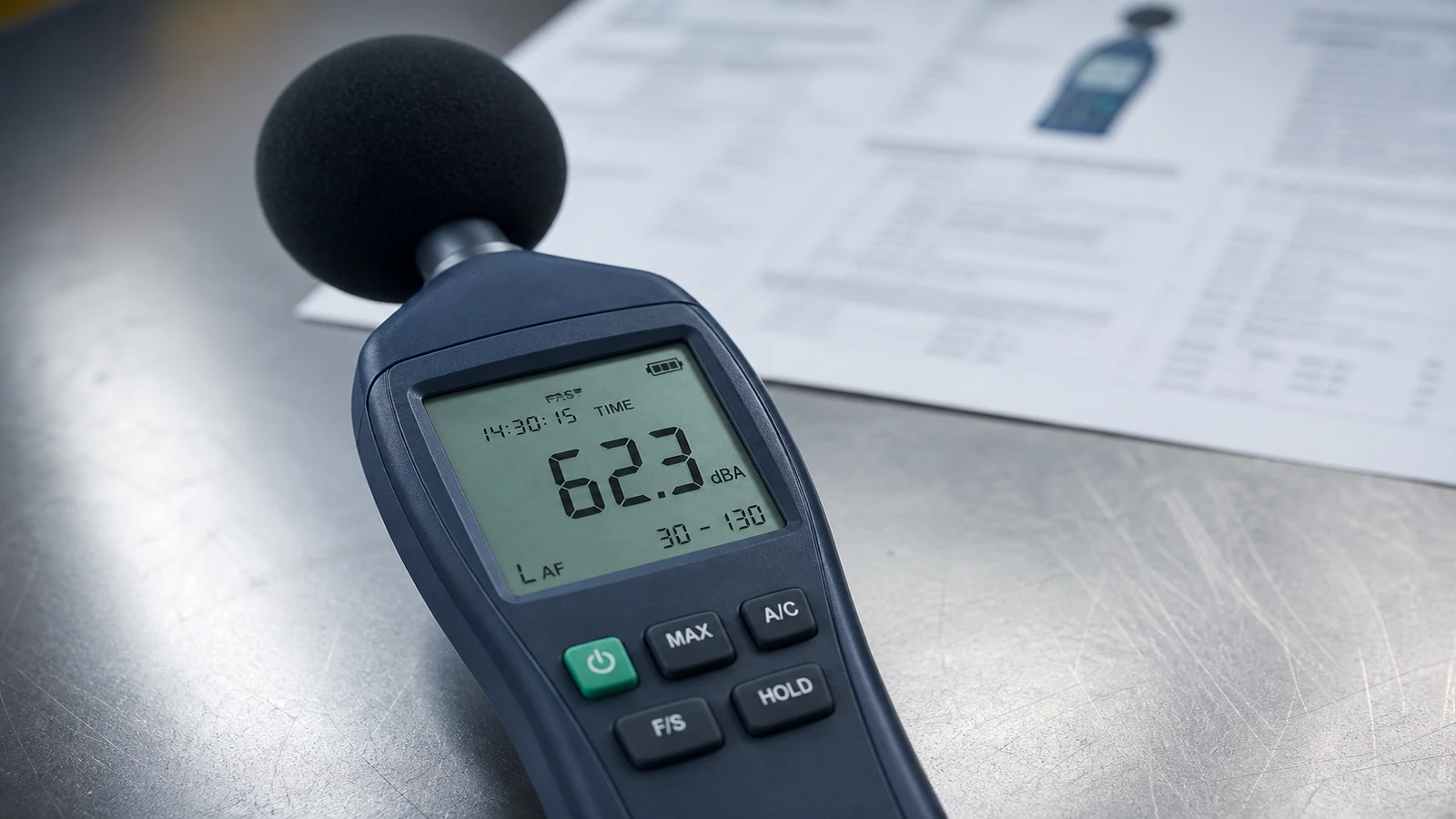
Short answer: A Class 2 statement in a sound level meter title is not the same evidence as a calibration certificate for the instrument you receive. Electroniclevel lists the CENTER-32 Digital Sound Level Meter, English Version at £165.99, with IEC 61672-1 Class 2 wording in the title. The current page does not display a certificate, calibration date, traceability record, calibrator, accuracy specification or measurement procedure. Keep those artefacts separate when writing a purchase brief. If a workplace, client or formal report requires documented measurement assurance, ask for the exact paperwork before treating the listing as suitable.
Key takeaways
- The product page contains Class 2 title wording, not a displayed certificate for a serialised instrument.
- Calibration status, traceability, accuracy and supporting measurement documents are not published.
- Define the evidence required by the job before buying or reporting a sound result.
Two different things in a buying file
The current listing identifies a CENTER-32 English-version meter and places IEC 61672-1 Class 2 in the title. It does not show a dated certificate or identify a particular serial number. A procurement record should therefore label the title claim as listing wording and request any certificate or calibration evidence separately.
| Item | What the page shows | What remains to verify |
|---|---|---|
| Model | CENTER-32 English Version | Serialised unit received |
| Class wording | IEC 61672-1 Class 2 in title | Supporting certificate or test record |
| Calibration | Not displayed | Date, method, traceability and status |
| Formal use | Preliminary readings described | Method and acceptance requirements |
Build the evidence request before ordering
The HSE explains that reliable workplace noise information must be representative of the work and used to decide what action is needed. The instrument is only one part of that chain. Ask for the information that lets the responsible person judge whether the exact unit and method can support the intended record.
- State whether the job is preliminary comparison, exposure assessment or formal reporting.
- Request the exact model documentation and any certificate tied to the supplied unit.
- Record the required settings, procedure, calibration and reporting format.
- Do not call the result certified or compliant unless the required evidence exists.
Do not infer accuracy from a class label
The current product page does not publish accuracy, range, weighting, time response, calibration interval or operating conditions. The manufacturer does not specify those details in the supplied material. A class reference may be important to a buyer, but it cannot fill every technical field or decide whether a particular workplace method is valid.
When the listing is not enough
If procurement needs a certificate, traceability or a defined method, pause until the seller provides the required documents. HSE says workplace exposure assessment should be representative and that competent people should understand how to use a noise meter and interpret results. Keep the title claim, certificate request and intended use as separate entries in the purchasing file.
Related guides and product details
Treat Class 2 as wording to verify on this listing, and buy only when the paperwork matches the measurement decision. Read Digital Sound Level Meter for a UK Workshop for related guidance. Read Is Electroniclevel.co.uk a Spirit Level Shop? for related guidance. Review the documented specification on the CENTER-32 Digital Sound Level Meter, English Version product page before ordering.
Sources and safety context
- Supports the title wording, model identity and absence of displayed certificate, calibration and detailed specifications Current Electroniclevel product page.
- Supports representative workplace exposure estimates, competent use of noise meters and the need to interpret results within a wider assessment HSE: Noise.